
Episode 06: When Children Grieve - with Dr Robin Goodman
For most of us, the first lesson about death was silence. Someone disappeared from the family, the adults spoke in lowered voices, and we were sent outside to play. It was meant kindly - a way of holding something heavy away from small hands. But children notice an absence long before they have language for it, and when nobody explains, they explain it to themselves. They fill the gaps with their own stories: that it was their fault, that it might be catching, that if they are very, very good it will not happen again. Somewhere along the way we decided that children were too young to grieve. They were grieving anyway - just without us.
In today's episode, I'm joined by Dr Robin Goodman - psychologist, art therapist, child life specialist, and one of the most respected voices in the field of childhood grief and trauma. Robin has spent decades alongside children and families navigating loss, from everyday bereavement to large-scale traumatic events including her work with children after 9/11, and her research has shaped how schools, clinicians and parents support grieving children. She speaks about the "grief bursts" that carry a child from playing to crying within a minute, and about learning to read behaviour as language - the perfect child and the difficult child both telling us something, if we are willing to be the detective.
We talk about how children understand death at different ages, and why honesty never has to mean telling them everything. Robin describes asking a child too young to remember her mother not what she recalled, but what she knew about her - and how a story gets built from photographs, from other people, from anything but memory. We explore what grief looks like when it arrives as tantrums, regression, guilt or faultless behaviour; how ritual, memory boxes and creative expression give a child somewhere to put what they feel; how to tell ordinary grief from grief that needs more support; and how a grieving parent can show real emotion without frightening anyone. Robin also shares the idea that stayed with me longest - post-traumatic growth, PTG rather than PTSD.
It's a practical, deeply reassuring conversation about what children actually need from us - and a reminder that they are far more capable than our fear allows.
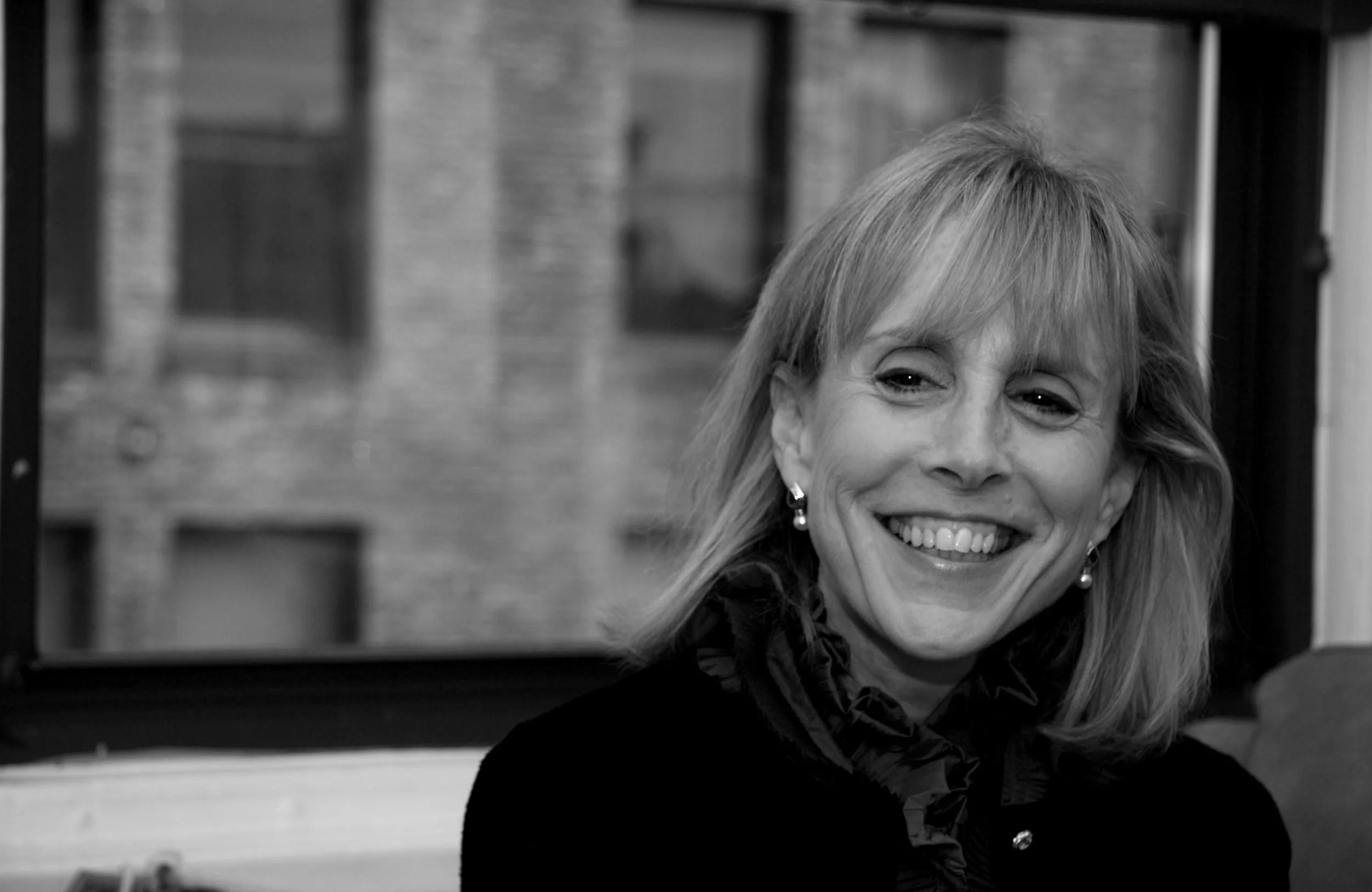
Dr. Robin Goodman
Dr. Robin Goodman is a psychologist, art therapist, certified in Trauma-Focused Cognitive Behavior Therapy in trained in Prolonged Grief Disorder therapy. In addition to private practice, she is Associate Director of Public Education and Bereavement for the Child HELP Partnership at St. John’s University.
She is the co-chair of the Child Traumatic Grief and Traumatic Separation Collaborative Group at the National Child Traumatic Stress Network. Previously she was Co-Director of the 9/11 Child and Family Recovery Program at the NYU Child Study Center and consulted on trauma and grief related issues to the Department of Defense Educational Directorate and the Tragedy Assistance Program for Survivors and was Chair of the NY State Psychological Association Disaster Response Network. In addition to training in child and adolescent psychiatry, she established child life and behavioral health programs at pediatric cancer services in New York City hospitals and was Executive Director and bereavement program director for A Caring Hand Founded in Memory of Billy Esposito. Dr. Goodman developed Making Connections, a child and family grief group curriculum implemented in New York City and nationally. She is committed to increasing awareness of mental health and developed Caring for Kids After Trauma and Death: A Guide for Parents and Professionals, used throughout the country following 9/11. Find out more about Dr. Goodman’s work here
Links and Resources for this episode:

Dougy Center
The Dougy Center began with a question. In 1981 a thirteen-year-old called Dougy Turno came to Portland for experimental treatment for a brain tumour, and wrote to Elisabeth Kübler-Ross to ask why nobody would talk to him about dying. She put him in touch with Beverly Chappell, a former nurse, who noticed that Dougy could speak with other seriously ill children in a way the adults around them could not manage. He died two months later. Chappell opened her own front room to four boys who had each lost a father, and in 1982 that became The Dougy Center - widely regarded as the first place of its kind, built on the belief that grieving children don't need to be counselled at so much as put in a room with other children who understand. It is still free, still peer-led, and serves around 400 children and 250 adults every month. Its model has been replicated at more than 500 sites worldwide, including the Raymee Grief Center in Dubai. Find out more
Books around the subject
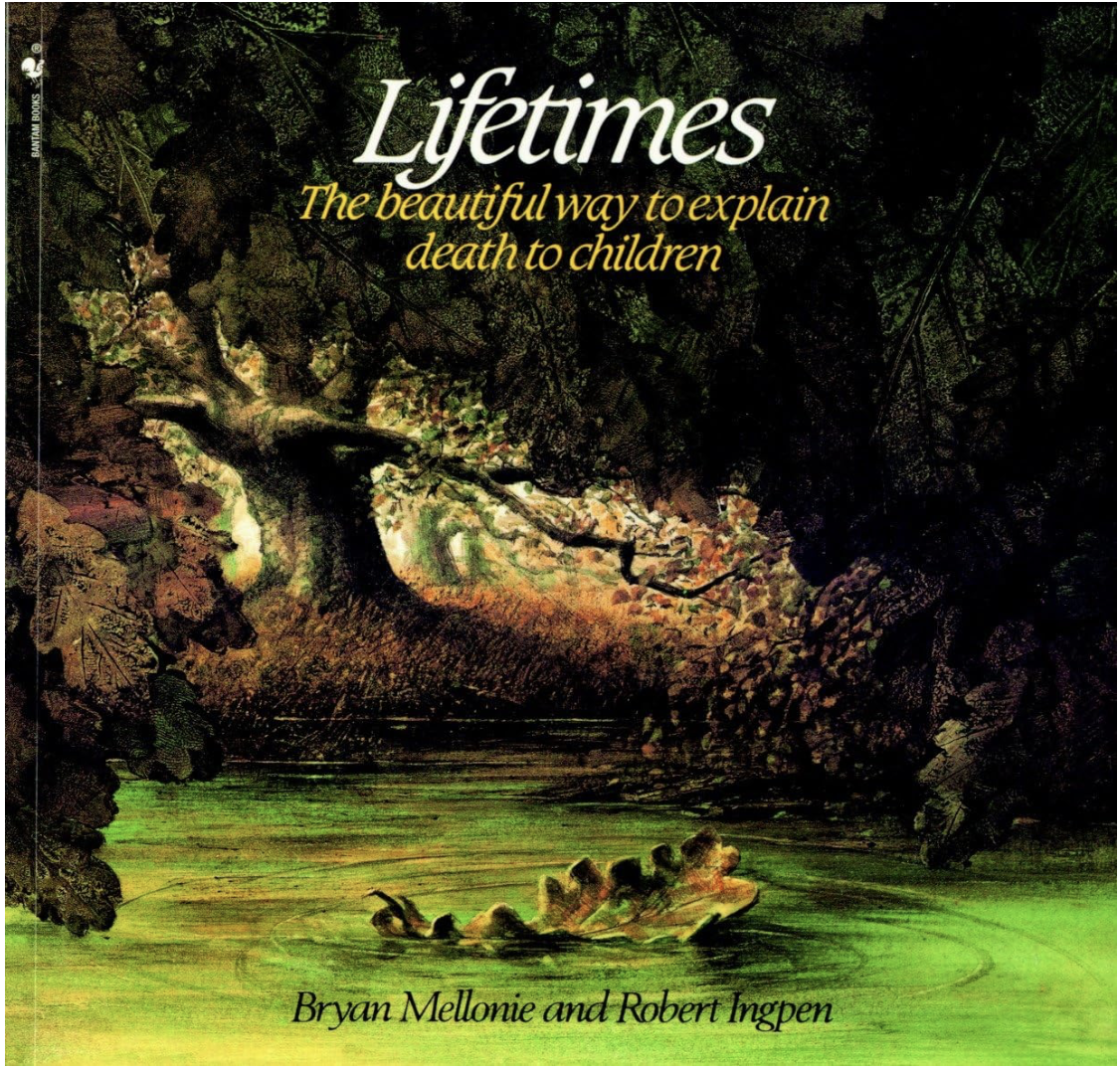
Lifetimes: The Beautiful Way to Explain Death to Children by Bryan Mellonie & Robert Ingpen (ages 3-8)
Explains death as a biological fact through the beginnings, endings and "living in between" of plants, animals and people. Secular, and deliberately offers no afterlife account — which is exactly why it suits families of any belief or none. Published in the UK as Beginnings and Endings with Lifetimes in Between. Buy it here
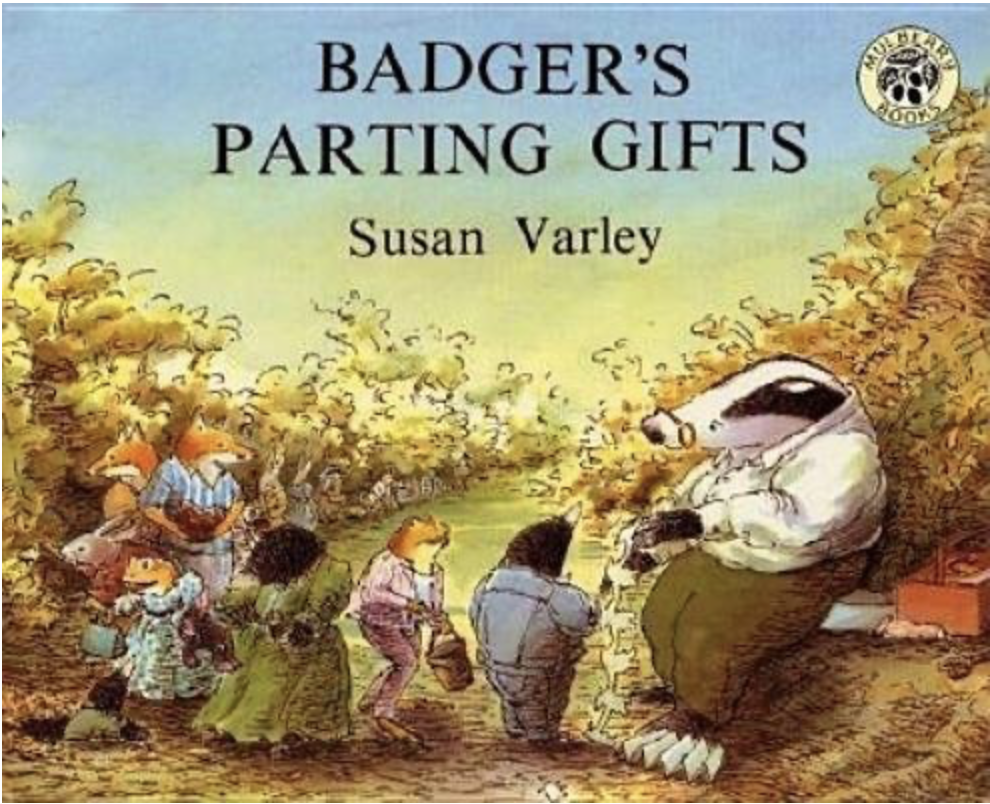
Badger's Parting Gifts by Susan Varley (ages 4-9)
All the woodland creatures—Mole, Frog, Fox, and Rabbit—love old Badger, who is their confidante, advisor, and friend. When he dies, they are overwhelmed by their loss. Then they begin to remember and treasure the memories he left them.
Told simply, directly, and honestly, this uplifting story will be of tremendous value to both children and their parents. A gentle classic that can help foster communication, care, and understanding. Buy it here
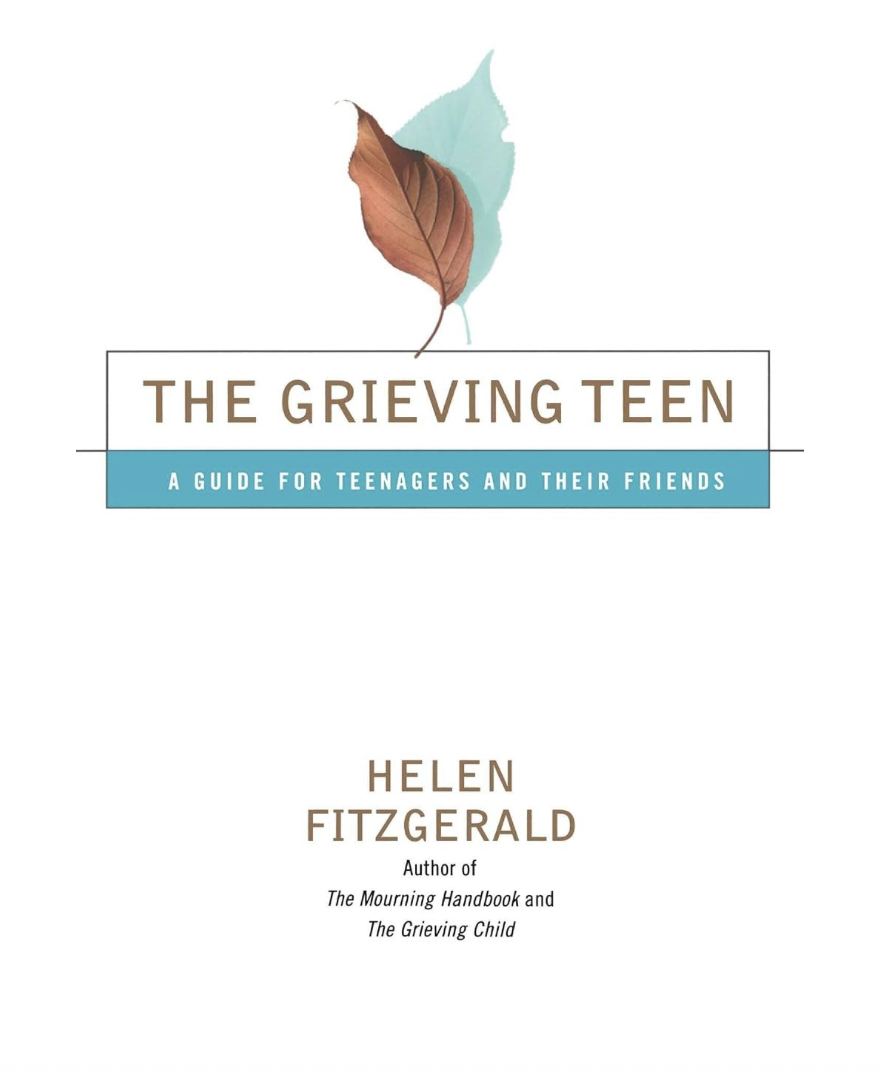
The Grieving Teen : A Guide for Teenagers and Their Friends by Helen Fitzgerald (ages 13-18)
In this unique and compassionate guide, renowned grief counselor Helen Fitzgerald turns her attention to the special needs of adolescents struggling with loss and gives teens the tools they need to work through their pain and grief.
Although the circumstances surrounding a death are difficult to handle at any age, adolescence brings with it challenges and struggles that until now have been largely overlooked. Buy it here
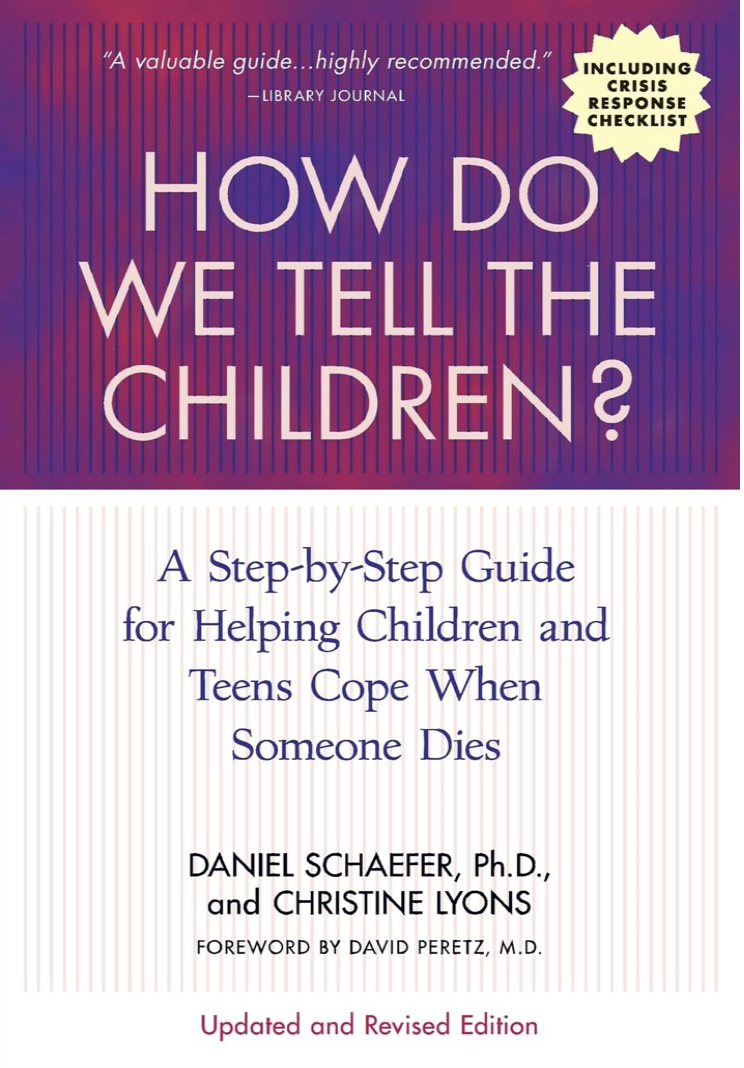
How Do We Tell the Children? by Dan Schaefer & Christine Lyons (for adults)
Dr. Daniel Schaefer, working with child psychologists and trauma experts, and drawing on more than three decades of experience with families in crisis, has written a practical guide for anyone who works or lives with children—parents, caregivers, counselors, or teachers—to respond to their inevitable questions about loss and change, life and death. He provides strategies to assist children with grief and trauma and offers time-tested advice and language that children can understand. Buy it here
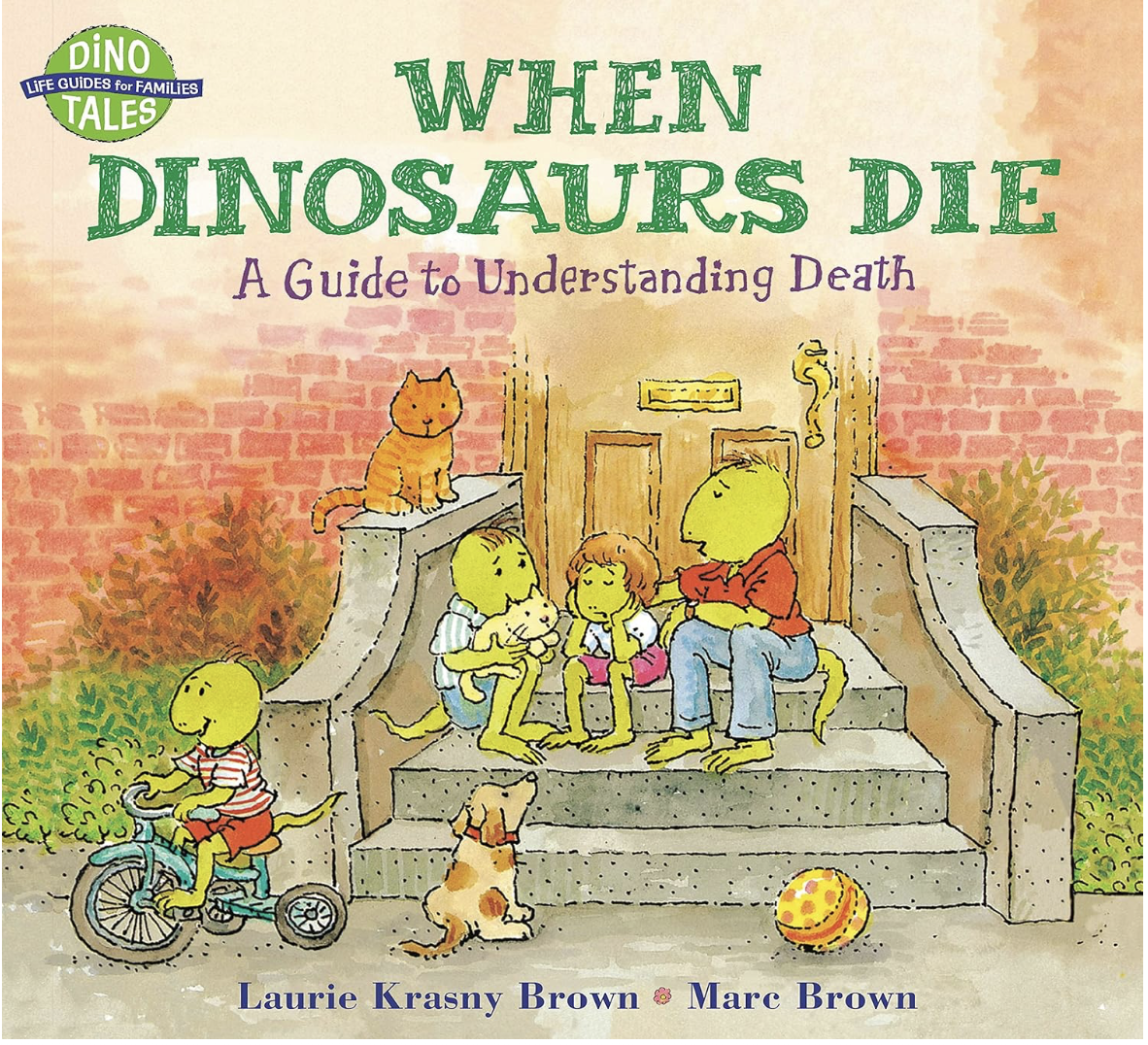
When Dinosaurs Die: A Guide to Understanding Death by Laurie Krasny Brown (ages 3-8)
Non-fiction in cartoon panels: what "alive" means, why people die, what funerals are for, and what different cultures believe happens afterwards. Surveys religious beliefs without endorsing one. The best single reference book for this age. Buy it here